
![[Image: gilghem.jpg]](http://dl.dropbox.com/u/28594063/PB8Stories/gilghem.jpg)
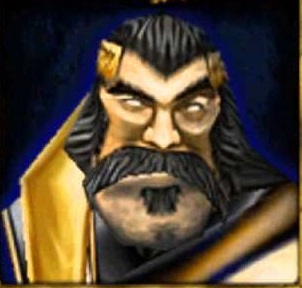
In 253, the aging High King of Lakeside Garden, Gil Ghem Esh, died, leaving behind no offspring. His favorite minister, Bo Wee Klee, was also a second cousin, and used his family connection to seize power within the capital. A favorite of the dominant Yellow faction, he used the coliseum thugs as a disposable army, targeting other ministers' streets and homes with riots. Confused as to the legitimacy of his claims, the largely ceremonial garrison barricaded themselves within their guardhouses and sat out of the conflict. Within a week, the city belonged to Bo.
![[Image: AreRevolting.JPG]](http://dl.dropbox.com/u/28594063/PB8Stories/AreRevolting.JPG)
However, the nephew of the old High King on his wife's side, one Vi Jays Ing, governor of the northern villages, refused to give up his claim to the throne. All along the riverland from Lakeside Garden to the southern foothills of Tranquil Meadow, the villagers' militia declared for Vi, who used his newfound strength to cut off the capital from anything north along the river, and then rapidly pushed west to the mines and quarries along the capital's demesnes. Fighting was irregular as both claimants to the throne were deeply paranoid about treason and rebellion among their own ranks.
![[Image: CoreLands.JPG]](http://dl.dropbox.com/u/28594063/PB8Stories/CoreLands.JPG)
The chaos within the capital led to swift reactions within the nearby cities. In Tranquil Meadow, the king of the city, Wo Dis, took upon the appellation of the "Tiger King", supported by the Hindu priesthood who were a dominant force within the city. He ruled the city as a separate state, not bothering to send taxes downriver. In Verdant Acres to the west, the scholars of the library formed a ruling council over the weak old prince's objections, closing the eastern gates of the city while collecting the rents from the Slot Valley region north of the city's hilly border.
![[Image: NorthZone.JPG]](http://dl.dropbox.com/u/28594063/PB8Stories/NorthZone.JPG)
Throughout the Generican civilization, the ripples of the capital's revolt spread. In the north The Greenways was a bastion for the old high king's family, as Prince Gil Thor Pe of the city was a great-nephew himself. However, the prince was content to merely rule his own city in peace. In Liguria to the north, the ruling Kalinites of Coldspring Way asserted their independence from the capital, but were largely engaged with a constant low-grade border war with the Aphe tribe in the northeastern hill lands. The experienced and venerable Mardoc's Company honed their reputation as the premier guerrilla regiment of the realm in those long campaigns.
![[Image: MarDocWin.JPG]](http://dl.dropbox.com/u/28594063/PB8Stories/MarDocWin.JPG)
![[Image: LongSaltLake.JPG]](http://dl.dropbox.com/u/28594063/PB8Stories/LongSaltLake.JPG)
The cities along the Long Salt Lake were largely unaffected by the anarchy to their west, with their generally smaller populations and strong sense of loyalty to the Generic ethnic identity dampening the fervor seen elsewhere. The prince of Willowbrooke made official subservience to all three claimants along the Great River valley, while the king of Hidden Valley declared his state neutral. In the smaller, younger city of Riverside Manor, the ruling prince officially retired before he could be approached to take sides, abandoning the governance of the city to the priesthood of Artemis, who administered ably in his stead.
![[Image: OldZululand.JPG]](http://dl.dropbox.com/u/28594063/PB8Stories/OldZululand.JPG)
Of particular note was the vast and depopulated territory of Old Zululand. The Lords of the Zulu had always ruled by tribe, until the Crusade and the Exile movements had united the Zulu people into a far more cohesive whole. The remnants, scattered and leaderless, had adopted Generican culture whole-heartedly, and over the preceding century and a half had mixed heavily with the soldiers and immigrants from the west. In the cities of Western Heights, Amazon Circle, and In Swallowdale the military governors kept order, although in the outlying districts some infighting occurred between elements of the army. North in the Stony Knob district and in the wastelands of Zaxby, the bulk of the army was still engaged in pacification of the restive remnants of the White Castle Tribe, who had maintained cohesion after the Exile.
![[Image: The_King_of_Siam.jpg]](http://dl.dropbox.com/u/28594063/PB8Stories/The_King_of_Siam.jpg)
Almost a decade into this tumult there emerged out of the west a small fleet from Hawke's Ridge. In 262, Kom Ho Dhor made landfall at the mouth of the Great River, accompanied by a small detachment of archers and a cadre of scholars.
![[Image: HawksRidgeIsland.JPG]](http://dl.dropbox.com/u/28594063/PB8Stories/HawksRidgeIsland.JPG)
The large island district of Hawke's Ridge had escaped notice by the claimants to the throne, sitting neutral as the prince of the large commercial city mobilized archers and charioteers from the surrounding islander populace. What was a very tightly held secret was that he was also hiding the illegitimate son of the old king's niece on his sister's side. Claiming by rights of blood and the gods, King Kom Ho Dhor, bastard nephew of the old king, was come.
![[Image: HRandOR.JPG]](http://dl.dropbox.com/u/28594063/PB8Stories/HRandOR.JPG)
King Kom Ho Dhor flew a blue banner, unmarked at first. His followers, however, embraced his symbol of blood and placed a red crown insignia upon a blue field, the flag of Generica to this day. The story of his long revolution is recounted in countless folktales and stories, suffice it to say he was successful, and his dynasty lasted for many centuries, even up to now.
![[Image: BackSolid.JPG]](http://dl.dropbox.com/u/28594063/PB8Stories/BackSolid.JPG)
If only you and me and dead people know hex, then only deaf people know hex.
I write RPG adventures, and blog about it, check it out.
I write RPG adventures, and blog about it, check it out.

 ?
?

![[Image: Civ4ScreenShot0491.JPG]](http://dl.dropbox.com/u/28594063/PB8T123/Civ4ScreenShot0491.JPG)
![[Image: Civ4ScreenShot0490.JPG]](http://dl.dropbox.com/u/28594063/PB8T123/Civ4ScreenShot0490.JPG)