On Nostalgia, an Essay by N. Fragar.
It’s Complicated
The literature of Western civilization begins with the Iliad of Homer. Some Asian literature is older, and Homer and certain Indian poems share common but unrecorded ancestors. For the Western tradition, though, the Iliad is It. All else is just footnotes to Homer.
And having kicked off European literature with the Iliad, Homer supplies an encore with the Odyssey. The Iliad is the epic story of
50 days at Ilium, another name for the city of Troy. In these 50 days, we don’t get such highlights as the Trojan horse, Achilles’ heel, or even any golden apples, if you’re already familiar with the Trojan War story. Instead, we get the price of one man’s wounded pride and the calamitous human cost of war. This is not the one you read in school.
I read the Odyssey in school. Do we still make kids read the Odyssey? Unlike the Iliad, the Odyssey is an adventurous romp through monster-filled wilds and royal courts. The plot is simple: Odysseus wants to get home after the Trojan war, but, having angered some gods, he’s going to have to suffer a lot along the way.
In the very first line of the Odyssey, Homer sets out what he’s about: Andra moi, ennepe, mousa, polutropon (Tell me, Muse, of the man of many ways). That English translation is the one found in my schoolboy copy by Richmond Lattimore. I still have it on my shelf with my name in a terrible cursive on the inside cover. Lattimore’s phrase “man of many ways” is his attempt to get at what Homer meant when he called Odysseus “polutropon.” Polu=poly=many. Tropon=turn. So Odysseus is a “many turn” man. As Odysseus tries to get home, he will be turned this way and that. He’ll be scattered along “many ways.”
But perhaps polutropon doesn’t refer to Odysseus’ circumstances but his character. As Odysseus travels through various lands, he adapts to his environment, outwitting monsters and wooing princesses. Perhaps he’s a “man of many turns” because of his versatility. The story of the Odyssey is that of a man tossed and turned by fate but adjusting his sails to turn with the wind. Perhaps.
Each translator of the Odyssey has to make a decision about how to turn polutropos into English. While writing this, I stumbled on a neat
blog post with a bunch of different translations. If you’re part of the smart set who stays informed by means of the New York Times, you might know that most recent Odyssey translator is Emily Wilson, whom Wikipedia notes is the first woman to translate the Odyssey into English verse. And how does the first female English-verse Odyssey translator render polutropos? “Tell me about a complicated man.” How should I describe Odysseus? It’s complicated.
Wilson isn’t an idiot. She wrote a long
defense of “complicated” a few years afterwards. What I can’t get past is how “complicated” in English describes the victim. Something is complicated because someone has complicated it. Sure, Odysseus is complicated because of his situation, his status, his relationships. But he also complicates the scenarios in which he finds himself.
You Can’t Go Home Again
Odysseus wants desperately to get home and leave the war behind him. He has a small kingdom, a wife, and a son waiting for him. He suffers from nostalgia, which is Greek for “pain at being denied a homecoming.” (
Seriously!!)
Odysseus’ attempts to get home encounter constant difficulties. He is set off course, waylaid, restrained. The polutropos man is turned around and around by situations and just as frequently tries to turn these situations to his benefit.
Even Homer’s narrative twists on itself. In parts we see Odysseus’ journey ourselves. In parts, we overhear Odysseus recount earlier, off-screen adventures to foreign kings in exchange for hospitality. (And how honest is this twisting/twisted man being?) Even the flow of the narrative seems to impede Odysseus’ forward progress.
Well, not to spoil it, but Odysseus finally makes it home. He washes ashore on his rocky little kingdom, disguised as a beggar. The disguise is impenetrable because he is in fact a lone, poor, old beggar man. And his kingdom? His flocks have been eaten up by uninvited guests who are staying in his palace, attempting to marry his wife, a presumed widow. His home is yet another place of danger for the versatile man to overcome.
Just as with the Iliad, the ending of the Odyssey is shocking and apparently out of nowhere. I won’t spoil either because if you’ve remained unspoiled to the very first works of Western literature, you deserve to have your meeting with Homer unmediated. (Ha.) But let’s just say that Odysseus tries to return home and finds ambiguous success. Home is a river that you can’t step into twice? Sure.
Home is Realms Beyond
When you think about the internet, what shape does it take? Our language is so stuffed with spatial metaphors, that it’s hard to get past them. (Do you see what I did there?) When I was a kid and the internet was young with me, I thought of the internet as a web with me at the center. My frequently used places were the first rings. As I looked further and further afield, I encountered the borders or edges or limits of the internet: blogs with single digit readership, forum threads without any responses. I felt like I discovered things on the internet.
As I’m Googling things for this essay, I’ve almost completely lost that sense of discovery. I type “Emily Wilson Odyssey” into Google, and before any websites even appear in the window, I’m given Google’s AI-generated overview of what it thinks I want to know, complete with bullet-points and hyperlinks. I’m not discovering anything; I’m receiving a briefing from my helpful AI mediator. Neither complicated nor much turning.
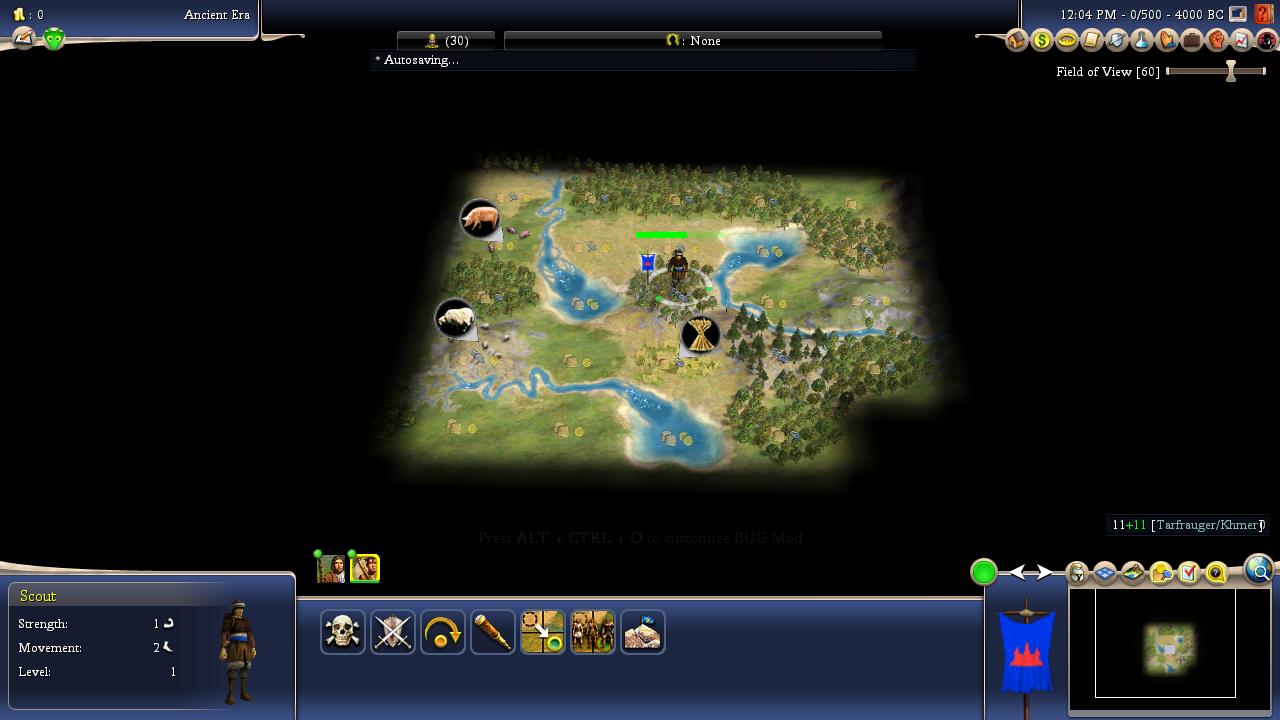
In the Spring of 2010, I discovered Realms Beyond. I was looking for help with Fall from Heaven, a complicated mod of Civilization 4. By some now-forgotten combination of search terms, I discovered Fall from Heaven PBEM 1, a game played here. I read it, and I was fascinated.
It’s hard to describe the feeling that overtook me that year. These people were playing a game on a level I couldn’t yet comprehend, while interacting with their human opponents with shifting, nuanced diplomacy, and writing about all of it with highly entertaining self-reflection.
From FfH PBEM 1, I binged so much excellent game reporting. Intoxicating too was the omniscient lurker perspective: these fascinating minds were revealing their thought processes, and from the safety of my invisible perch, I could weigh them against one another.
Realms Beyond became my home on the internet. I lurked for two years, reading everything that interested me. At this point, I was just a reader. It was enough to be entertained by the minds on display and the human drama played out in video games.
There was also the intimidation factor, of course. Nowadays, the central hubs of the internet (again, another spatial metaphor) are run by corporations, interested in selling you something. I don’t mean this in any sort of anti-capitalist, long-haired, fight-the-man kind of way. I just mean that if you want to talk about a video game on Reddit, or the Steam forums, or just about anywhere else, your conversation will usually be moderated by employees of the company that sells the game. If you want to chat in-game with your fellow players, your chat will run through an automatic moderator, with potential punishments for rule-breaking. Research apparently shows that customers don’t buy as much when the chat is completely free.
But there were no (or very few) politeness commissars in the days of the old internet. The communities policed themselves a bit, but the whole zone resembled something of the wild west. And boy, could people be mean. So I was reading these amazing after-action reports of hard fought Civ games, and people were getting flamed. “So-and-so is a moron who doesn’t know how to play.” Etc. Some of those people and some of that kind of talk persists even today on Realms Beyond, but it was much louder back then, and it scared me away from participating. What if I made a fool of myself?
I made an account in 2012 to join a multi-participant Civ4 game. I just wanted to lurk, but the game would take place in locked subforums to prevent cheating, so I had to make an account and lurk one particular team. So be it. From here I moved to the occasional comment. It would take another five years before I summoned enough courage to join a game for myself.
Dear reader, I had been intimidated for nothing. Sure, I got absolutely demolished my first game, but who cares? I had an absolute blast. I loved engaging all the mechanics of Civ4 to build my little empire. I loved having to reckon with flesh and blood, thinking, feeling opponents. And I loved turning all those random happenings into a narrative for my own forum reports.
From then on, multiplayer Civ4 was my main hobby, and I spent more time than not with an active Civ4 game ongoing.
Look on My Works Ye Mighty
When I first started reading Realms Beyond, it was only a few years after the release of Civilization 4: Beyond the Sword. The first game I participated in had twenty-five players! Nowadays, good luck getting eight. There’s a time and a season for everything under heaven. Entertainment media ebbs and flows. And Realms Beyond was never just Civ4 multiplayer. The website started with the original Diablo, I believe. It’s the current center for Master of Magic modding. Since it’s my home on the internet, I’ve tried, not always successfully, to be a good citizen, enriching the Realms Beyond catalog with some other
niche games and embarking on diplomatic missions to our
German counterparts.
But I know that one day the lights will dim, and we’ll be left with memories. A long time ago, I heard a song. I couldn’t remember the artist or even where I heard it. I could hear it in my memory, and I remembered the lyrics. Recently, after trying for a while, I identified it. It’s called “When I Close My Eyes” by The Basics. (Google AI helpfully tells me that when I close my eyes, I may see colors, patterns, and flashes of light. Fascinating.)
Apparently, The Basics were a husband-and-wife duo who played the coffee shop scene in California. They’ve since
divorced. And if you now look for a band named The Basics, you’ll mostly get a different group. And given the era, The Basics songs likely never made the jump from CD to Mp3. In other words, this song that I can hear crystal clearly in my head, I cannot share with you. It might as well not exist anymore.
The lyrics went, “But when I close my eyes I can see forever, and the leaves on the trees are a brilliant green.” Very sweet.
When I close my eyes, I can see so much of my formative internet experiences that are simply gone. The old Civilization game reports used to have pictures. This guy Sirian had an amazing set of game reports, all gone. People, too, have gone. Likely moved on, but from a stationary vantage point, moving on and disappearing are the same.
Made Weak by Time and Fate, but Strong in Will
For over fifteen years, the intense, emotional play of Realms Beyond has been my hobby. Recently, a Civ4 game almost failed to launch for lack of interest, and the frequency of forum activity has diminished. This frontier of the internet is harder to find among the corporate-sponsored watering holes, and the slow interactivity of forums is less dopamine-stimulating than the little pings of Discord.
Yet, as someone once said, and even if the world should end tomorrow, I still would plant my little apple-tree.
I’m no Odysseus, and lurking a webpage is no Odyssey. But I have gone through “many turns” on this little website. It’s been “complicated,” and I’ll be sad when the kind of activity that was Realms Beyond at its best is no more.
You know, poets speculated about what happened to Odysseus after he made it home to Ithaca. Did he retire, happy and content to have made it home alive? Alfred Tennyson didn’t see it that way. In his mind, an adventurer like Odysseus couldn’t possibly stay still. In his beautiful, melancholic poem “Ulysses,” he imagines the aged Odysseus getting ready to sail away again:
Old age hath yet his honour and his toil;
Death closes all: but something ere the end,
Some work of noble note, may yet be done,
Not unbecoming men that strove with gods.
I hope this current game, PB85, is not the last Civ4 game played here, but if it is, I hope it generates enough entertainment to stand worthily among those reports from the Civ players of old.